
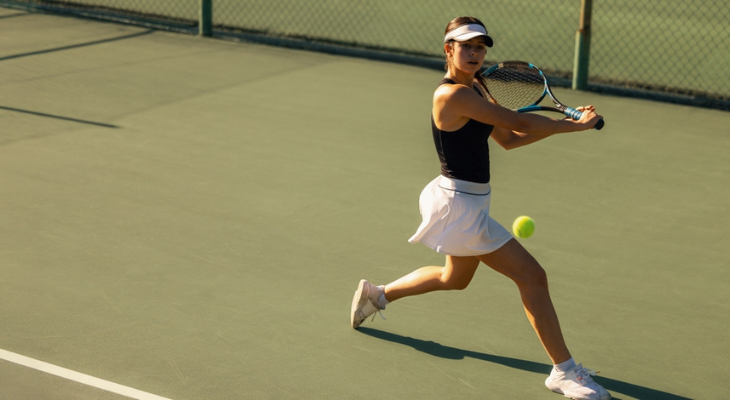
How Vision Therapy Improves Athletic Performance
Athletic success isn't based on physical skills alone. Your visual skills help you keep track of the action on the field, judge distances, and coordinate your movements. If you're not satisfied with your performance, vision therapy could help you reach your goals.
What Is Vision Therapy?
Vision therapy improves crucial visual skills and strengthens communication between the brain and the eyes. The therapy is conducted by a professional trained in vision therapy techniques and is tailored to your needs. Your treatment plan may involve special lenses, assistive tools or devices, and games or activities that improve your reaction time, sharpen focus, and enhance eye-hand coordination.
Could Vision Therapy Help You?
Vision therapy may be a good option if you:
- Have Trouble Following Multiple Objects at the Same Time
- Miss Catches
- Make Errors
- Want to Improve Accuracy
- Lack Confidence
- Struggle to Follow Moving Objects with Your Eyes
- Need to Improve Consistency
- Can't Anticipate Movements of Players or Objects
- Are Uncoordinated
- Wish Your Reaction Time Was Better
Enhancing Your Athletic Performance with Vision Therapy
Whether you've just begun a new sport or you've reached a plateau in your performance level, vision therapy can help you improve these visual skills:
- Binocular Vision. Using both eyes together is essential for binocular vision. Your brain receives conflicting image from the eyes when you have a binocular vision problem. As a result, you may notice blurry or double vision or feel unsteady at times. Binocular vision issues can affect your ability to catch a ball or keep your balance on a key play. Vision therapy exercises and activities resolve these problems by training your eyes to work together as a team.
- Tracking. Good tracking skills help you follow the path of a ball or hockey puck and keep up with the action during a game. During vision therapy, you may strengthen your tracking skills by popping bubbles on a computer screen or shooting virtual targets.
- Depth Perception. Strengthening your depth perception skills helps you judge distances accurately or read a lie on the golf course. Thanks to vision therapy, you may notice that it's easier to tag a player or determine where the ball will land.
- Peripheral Awareness. Keeping track of movements in your side vision is just as important as watching the action in front of you. Improving peripheral awareness with vision therapy helps you spot an opposing player sneaking in to steal the ball or make a successful pass to a teammate at a crucial moment in the game.
- Contrast Sensitivity. College baseball players who improved contrast sensitivity with vision therapy scored more often and struck out less, according to a 2015 study published in Current Biology. Contrast sensitivity helps you separate objects from their backgrounds and see subtle variations in shading and patterns.
- Eye-Hand Coordination. Good eye-hand coordination helps you synchronize information from your brain and eyes with your movements and is crucial whether you're a runner, basketball player, or gymnast. Enhancing eye-hand coordination with vision therapy may improve the accuracy of your shots on goal or tennis swing.
- Visual Reaction Time. Poor visual reaction time affects your ability to process and respond quickly to visual information. Vision therapy activities help you react faster to visual cues. Reaction time in futsal players improved after vision therapy, according to a 2021 research study published in the International Journal of Environmental Research and Public Health. Futsal is a variation of soccer played with five players on a smaller field or court.
- Visual Focus. Focusing problems make it difficult to follow movements or quickly shift your focus in a fast-paced game. Navigating a paper maze with a pencil or playing a virtual reality game that includes quick focus changes could help you enhance your focusing skills during vision therapy.
Ready to find out if vision therapy could improve your athletic performance? Contact our office to schedule a comprehensive vision exam with the vision therapist.
Sources:
International Journal of Environmental Research and Public Health: Vision in Futsal Players: Coordination and Reaction Time, 8/27/2021
https://www.mdpi.com/1660-4601/18/17/9069
Current Biology: Improved Vision and On Field Performance in Baseball Through Perceptual Learning, 2/17/2015
https://www.ncbi.nlm.nih.gov/pmc/articles/PMC3932179/
NCBI: Journal of Functional Morphology and Kinesiology: Role of Sport Vision in Performance: Systematic Review, 5/23/2024
https://pubmed.ncbi.nlm.nih.gov/38921628/
All About Vision: Sports & Performance Vision: How a Sports Vision Specialist Can Help, 4/28/
New England College of Optometry: How Vision Skills Improve Your Performance, 4/13/2025
https://www.neco.edu/news/how-vision-skills-improve-your-performance/
International Sports Vision Association: Untitled Webpage
https://www.sportsvision.pro/athletes/vision-and-sports-performance/
